
PCNE Working Symposium 2009, Geneva, Switzerland
- 3 November 2009
- Geneva, Switzerland
The 10th PCNE Working Symposium 2026 will take place in Innsbruck, Austria. The symposium will be held over 2 days:
- 17th February: Pre-symposium and the GA
- 18th February: The Working Symposium
All the information about the program, registration, and abstract submission will be published soon.
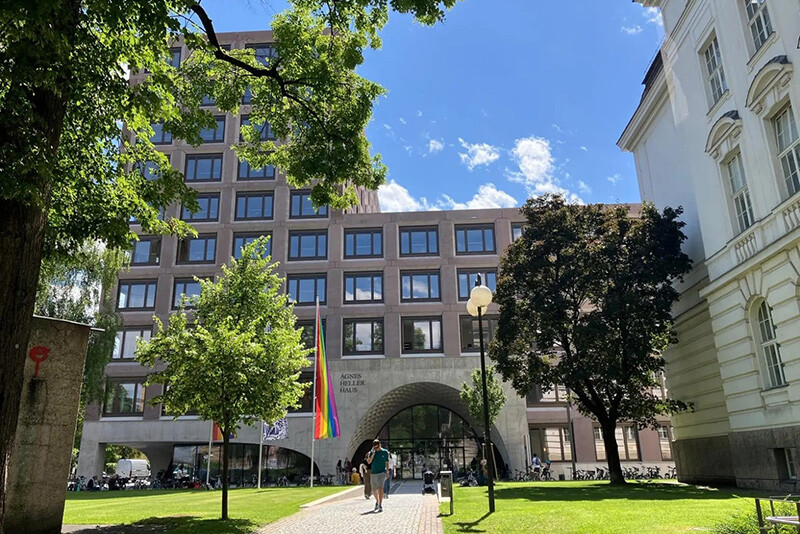
Venue: The conference will take place at the Innrain University Campus Ágnes-Heller-Haus (Innrain 52a, 6020 Innsbruck)

1. VERSION 10 IN ACTION: MAKING THE PCNE CLASSIFICATION WORK FOR YOU
Workshop facilitators: Ina Richling, Tommy Westerlund, Prof. Nejc Horvat, University of Ljubljana, Slovenia
Aims:
• To present and gather feedback on the proposed structure and content of PCNE Classification Version 10
• To begin drafting illustrative explanations and practical examples for selected codes, supporting their consistent interpretation and application
2. RETHINKING RESILIENCE IN THE PHARMACY PROFESSION TO ENHANCE PRACTICE AND RESEARCH
Workshop facilitators: Prof Liza Seubert, University of Western Australia, Julie Loveny, University of Western Australia, Prof Rhonda Clifford,University of Western Australia
Aim: This workshop aims to introduce participants to this innovative curriculum, which redefines resilience as a multidimensional construct. The program emphasizes the importance of building self-awareness and strong interpersonal connections as essential components of professional resilience.
Learning objectives: By the conclusion of the workshop, participants will have gained insights into evidence-based strategies that enhance both individual and collective resilience within the pharmacy profession and researchers. These strategies include emotional regulation, narrative reframing, and the establishment of supportive, psychologically safe work environments.
3. IMPLEMENTATION OF MEDICATION REVIEWS WITH AN INTRODUCTION TO IMPLEMENTATION SCIENCE
Workshop facilitators: Dr. Dorothee Michel, Markt Apotheke Eidelstedt, Hamburg, Germany, Robert Gordon University, Aberdeen, Scotland, Dr. Ayesha Iqbal, University of Alberta, Edmonton, Canada
Aim: This workshop aims to provide participants with a basic understanding of implementation science and equip them with the knowledge and skills to apply it in their own research projects.
Learning objectives: Through a combination of a short lecture and using the example of “Implementation of Medication Reviews in Community Pharmacies” for activities, participants will generate drafts for future studies to forward the field.
4. “SHAPING FUTURE PRACTICE: CO-DESIGNING A CURRICULAR UNIT ON DIGITAL HEALTH FOR PHARMACY STUDENTS”
Workshop facilitators: João Pedro Gregório, Universidade Lusófona/CBIOS, Portugal, Melanie Maia, CiiEM – Egas Moniz Center for Interdisciplinary Research, Portugal
Aim: This workshop aims to engage PCNE members in co-developing the structure and content of a new curricular unit focused on digital health and pharmacy practice.
Learning objectives: During the workshop session, participants will:
1. Identify and map key digital health competencies relevant to future pharmacists in relation to concrete learning outcomes.
2. Leverage PCNE members’ experience to ensure a research-informed and implementation-ready design.
3. Draft a shared framework for a modular unit adaptable across pharmacy programs.
Preliminary Programme
Pre-Symposium Program
17th February, Tuesday
- 9.00-12.30
Brainstorming session—PCNE vision (invited members only) - 12.30-13.30
Registration for the pre-symposium session and Lunch - 13:30- 16.00
Expert classes / Pre-symposium in German,
Implementierung neuer Dienstleistungen in der Apotheke – Wohin geht die Reise? - 16.00-16.30
Coffee-Break - 16.30-18.00
Expert classes / Pre-symposium in German,
Implementierung neuer Dienstleistungen in der Apotheke – Wohin geht die Reise?
(continue) - 18.00-18.15
Coffee-Break - 18.15 –20.15
PCNE General Assembly (members only) (hybrid)
Symposium Program
18th February, Wednesday
- 8.00-8.30
Registration - 8.30-8.45
Opening - 8.45-9.45
Keynote Lecture - 9.45-12.45
Workshop Series I, including break - 12.45-14.00
Lunch / PCNE Soapbox (members only) - 14.00-17.00
Workshop Series II (repeated), including break - 17.00-18.00
Poster session - 18.00-18.15
Coffee-Break - 18.15-19.15
Oral Communications - 19.15-20.00
Closing session - 20.00-23.00
Joint PCNE and ESCP social event
Although Innsbruck is surrounded by mountains, giving you the impression of always looking at a postcard, the climate is moderate, with snow expected in February. Innsbruck is the capital of the Austrian federal state of Tyrol and is a small city.
The Ágnes-Heller-Haus is easily accessible by public transport from the airport (F Line, ticket cost: 3 EUR, approximately 10 minutes) and within walking distance from the train station (approximately 10 minutes).
Specific travel info:
- Detailed information on how to arrive in Innsbruck (by car, train, or plane) can be found HERE
- Innsbruck has a small airport that is well connected to surrounding airports. Information about surrounding airports and connections is available HERE
We suggest you check bus connections HERE if you do not have direct shuttle airport transport to Innsbruck
Information about public transport is available HERE.
Most hotels provide a “Welcome Card” for stays of 2+ nights. This card includes free public transport and numerous other discounts (see HERE).
Accommodation
For the PCNE 2026 Symposium, we also recommend booking accommodation at Rufis Hotel, as the University of Innsbruck has arranged special rates for this event. The hotel is available for our participants from February 16th to February 20th, 2026 (covering the duration of both the PCNE Symposium and the ESCP Spring Workshop for participants attending both events).
Prices are:
- Double/Twin room: € 82,50 per person/per day incl. breakfast
- Double room for single use: € 127,00 per person/per day incl. breakfast
City tax € 3,00 p.P/day
These prices will be active until January 16th! After this period, prices and availability cannot be guaranteed!
Reservations must be made by direct contact with the hotel (E-Mail: hotel@rufi.at; Phone:+43 512 9123 5550).
Cancellation and change policy for booking an accomodation in Rufis Hotel:
- Free reservation cancellation is up to 1 day, 12:00, before arrival.
- The same rules apply to reservation changes
- If a no-show, the hotel reserves the right to charge 100% of the total amount.
Other hotels near the conference venue (without special arranged prices):
Workshop reports PCNE Medication Review
Workshop 1
- Report (pdf file 542kb)
The simple medication review.
Chair: Patrick Eichenberger, Switzerland
Participants will discuss a simple medication review, based on the medication history in the pharmacy. What are the problems that can be detected (drug-drug interactions, some side-effects, unusual dosages and some adherence issues)? How to perform the review?
Workshop 2
- Report (pdf file 1382kb)
The Intermediate medication review.
Chair: Anders Ekedahl, Sweden
An intermediate review can be performed when the patient can be approached for information. Such a review is based on medication history and patient information. What are the problems that can be detected (drug-drug interactions, some side-effects, unusual dosages adherence issues, drug-food interactions, effectiveness issues, side effects, and possible problems with OTC medications)? How to perform the review?
Workshop 3
- Report (pdf file 706kb)
The advanced medication review.
Chair: Nina Griese, Germany
The advanced medication review. Chair: Nina Griese, Germany An advanced medication review is based on medication history, patient information and clinical information. What are the problems that can be detected (drug-drug interactions, some side-effects, unusual dosages adherence issues, drug-food interactions, effectiveness issues, side effects, and possible problems with OTC medications)? But the advanced review would also make it possible to look at issues around indications related problems (indication without a drug and drugs without indication), and possibly also dosage issues based on laboratory data, antibiotic appropriateness, adherence to clinical guidelines & formularies etc..