
Transforming pharmaceutical care through research
- 10-13th February, 2027
- Neues Schulauer Fährhaus (Wedel) Hamburg, Germany
The 15th PCNE Working Conference will take place in Hamburg, Germany from 10th to 13th February 2027

The registration for the 15th PCNE Working Conference 2027 in Hamburg, Germany (10th to 13th February 2027) and abstract submission will open on 1.October 2026
The “Transforming pharmaceutical care through research” conference aims to connect science and practice.
Keynote lectures will highlight how to scale up and sustain pharmaceutcial care, how design thinking can help us to find solutions for current problems, how to design robust research projects and will finally explore the ethical perspective, are we doing the right thing?
We are confident that the inspiring environment, fresh air on the shore of the river Elbe, and excellent networking opportunities will spark new ideas and foster collaborations.
Venue: The conference will take place at the Schulauer Fährhaus (Parnaßstraße 29, 22880 Wedel) Practical & Travel Information

Conference Highlights
- Workshops: 12 hours of intensive learning
- Foppe van Mil Memorial Lecture
- Three Keynote Lectures
- Short Oral Presentations
- Poster Session
PCNE General Assembly: will be held in a hybrid format for PCNE members on Thursday, February 11th, at 17:30.
The best poster presentation and the best oral communication will be awarded!
Networking event
A networking (social) event will be held on Friday, February 12th, at the Restaurant Elbe1, within walking distance from the conference venue. The social event includes a dinner, registration for the event will be available in the registration form.


Sponsorship options are still available.
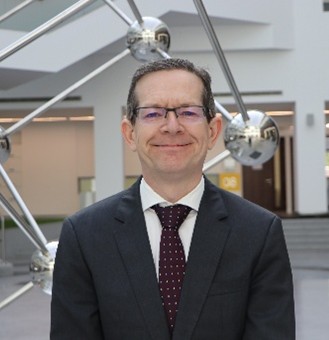
Keynote lecture 1: Wednesday, 10th February 2027 13:15h
Foppe van Mil Memorial Lecture
Title: “Beyond Effectiveness: Implementing Complex Interventions at Scale”
Speaker: Prof. Derek Stewart, Editor‑in‑Chief of the International Journal of Clinical Pharmacy
Despite extensive evidence on the efficacy and effectiveness of healthcare service innovations generated through methodologies such as randomised trials, cohort studies and economic evaluations, fewer studies demonstrate transformation through implementation and sustainability at scale. Yet meaningful health gain and optimal resource utilisation only occur when innovations are embedded, spread and maintained in healthcare systems. This lecture will focus on the implementation phase of the Medical Research Council framework for complex interventions, highlighting the theoretical lenses that support transformation at scale.
The lecture will be delivered by Professor Derek Stewart, Editor‑in‑Chief of the International Journal of Clinical Pharmacy, honouring the legacy of Foppe van Mil, the founding Editor‑in‑Chief, whose commitment to advancing pharmaceutical care continues to have significant impact.
Keynote lecture 2: Thursday, 11th February 2027, 9:00h
Creativity And Innovation In Healthcare Transformation – Design Thinking As A Viable Approach In The Artificial Intelligence (AI) Age
Dr. Joseph Maloba Makhoka, Senior Innovation Advisor – Growth House, University of Oslo, Norway
Advances in healthcare have arguably contributed to some of the most meaningful improvements in human life. Today, we are still faced with challenges – some new and other old – in transforming pharmaceutical care in particular, and medicine in general. This talk proposes applying Design Thinking approach in seeking such transformation, since this method helps teams conceive innovative ideas. Finally we consider the implications of the rapidly improving AI technologies on both research and practice with regard to this quest.

Keynote lecture 3: Friday, 12th February 2027, 9:00h
Translating research into community pharmacy care
Prof. Hanna Seidling, University of Heidelberg, Germany
This lecture explores how pharmacy research can create meaningful impact on patient care by strengthening the connection between evidence generation and service delivery in community pharmacies. It discusses the different forms of research that are relevant to practice, ranging from the development of new clinical evidence for patient counseling and medication management to the design, implementation, and evaluation of innovative pharmacy service models. It highlights existing pathways through which research informs practice, including continuing professional development, decision-support tools, and the active involvement of pharmacists in research projects. Importantly, the presentation adopts a bidirectional perspective, arguing that community pharmacies should not only be recipients of research findings but also active contributors to the research process, who can simultaneously build a bridge to patients and ensure that their perspectives are also incorporated into health services research. Hence, we will discuss how we could build a stronger research-practice ecosystem that fosters innovation and improves routine care.

Keynote lecture 4: Saturday, 13th February 2027, 9:00h
An Ethical Perspective on Pharmaceutical Care
Rainer Heide, University of Passau; Freie Universität Berlin, Germany
Deontology, Utilitarianism and the Bioethical Principles in Practice
This lecture examines pharmaceutical care (pDL) through three complementary ethical frameworks. Starting from Kant’s deontology, it shows how the categorical imperative — through the formulas of universalizability, human dignity, and autonomy — grounds pharmaceutical care as a lived ethic of duty, demanding standardized, respectful, and consent-based practice.
The talk then turns to utilitarianism, contrasting act- and rule-based reasoning to explore how pharmaceutical services generate individual and systemic benefit, while surfacing tensions between autonomy and welfare, individual cases and social resource allocation.
Finally, the four bioethical principles of Beauchamp and Childress — autonomy, beneficence, non-maleficence, and justice — are applied to concrete pDL scenarios to illustrate how these principles function not as a rigid algorithm but as a reflexive framework for everyday ethical judgment in pharmacy practice.
Taken together, the three perspectives argue that ethical competence — the ability to navigate recurring tensions between duty, benefit, and fairness — is an integral part of the pharmacist’s professional identity.

1. Implementing Complex Interventions at Scale: Approaches and Theoretical Lenses
Workshop facilitators: Prof. Derek Stewart, International Journal of Clinical pharmacy; Prof. Zachariah Nazar, Qatar University
Background:
The Medical Research Council (MRC) framework for complex interventions describes complex intervention research as 4 phases underpinned by core elements. Of these phases, the implementation phase attracts less attention in the research literature. Described as ‘deliberate efforts to increase impact and uptake of successfully tested health innovations’, it is this phase that supports transformation through implementation and sustainability at scale. In this workshop, participants will gain hands-on experience with theoretical lenses that support transformation at scale and consider how these may apply to their own research.
Aim:
- To explore the implementation phase of the MRC framework, with hands-on experience of theoretical lenses that support transformation at scale.
Learning objectives:
- Explain the implementation phase of the MRC framework for complex interventions.
- Compare and differentiate key theoretical lenses used in implementation research (Consolidated Framework for Implementation Research [CFIR], Normalization Process Theory [NPT], Theoretical Domains Framework [TDF]).
- Select and justify appropriate theoretical lenses for implementation research questions.
- Apply theoretical lenses to implementation research.
- Construct a scoping review protocol examining the application of implementation theory in pharmacy research.
Activities:
- Introduction to the MRC framework including key considerations and challenges relating to implementation, scale-up and sustainability.
- Group work exploring the principal domains/constructs, purposes, strengths and limitations of theoretical lenses (CFIR, NPT, TDF).
- Group work critically appraising recent implementation studies employing CFIR, NPT, TDF, focusing on selection and justification.
- Individual and group work applying theoretical lenses to identify and analyse determinants of implementation, using findings to consider implementation strategies.
- Group work preparing an initial scoping review protocol on the application of implementation theory in pharmacy research.
Targeted workshop participants: This workshop is most suited to PhD students and novice researchers.
After the workshop for those interested:
- Opportunity to progress the scoping review for submission to International Journal of Clinical Pharmacy

2. AI as a Research Partner: Quality Criteria for the Future of Pharmaceutical Care Research
Workshop facilitators: Dr Charlotte Rossing, Pharmakon, Denmark; Prof. Kreshnik Hoti, University of Prishtina, Kosovo
Background: Mapping the field
•Presentation: Where is AI already being used in pharmaceutical care research today?
•Participants map their own experiences (what works, what raises concerns)
•Review of existing quality criteria as a starting point
Aim: To develop a set of concrete, shared quality principles for the use of AI in pharmaceutical care research — applicable to both qualitative and quantitative research for future pharmaceutical care research.
Activities:
•Group work: for each classic quality criterion
(transparency, reflexivity, reproducibility, audit trail, etc.), discuss:
What does AI challenge here? What must we insist on?
•Cases: participants test/discuss concrete examples to ground the discussion
•Plenary summary of key tensions
Formulating principles
•Group work to draft concrete criteria/principles (e.g. reporting requirements for AI use, requirements for human validation, transparency about prompts/models used)
•Joint prioritisation and consolidation in plenary
•Agreement on next steps

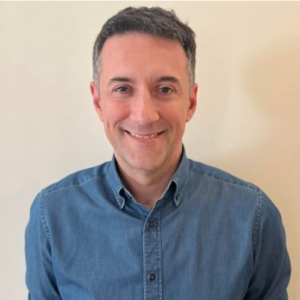
3.From guidelines to implementation: Insights in barriers and facilitators in delivering pharmaceutical care for Diabetes Type 2 patients
Workshop facilitators: Dr. Kenji Fujita, The University of Sydney, Kolling Institute, Australia; Dr. Kjell H. Halvorsen, UiT The Arctic University of Norway, Norway; Dr. Martina Teichert, Leiden University, Netherlands
In this workshop a framework for a topic guide will be developed to interview CP and other stakeholders about pharmaceutical care needed and wanted for DM2 patients, and about barriers and facilitators both to implementing these services and to measuring related QI scores.
Aims of the workshop
After this workshop, participants will be able to:
– gain knowledge on the feasibility of QI measurements and benchmarking on the example of Japan,
– get insight into the development of a general QI set in Norway to measure quality in community pharmacies
– understand barriers and facilitators in using QI the Netherlands,
– interpret the results of the prior QI validation study and reflect on their meaning to CP and stakeholders as patients, healthcare inspectorate, health insurance companies and policy makers,
– understand preconditions to implement pharmacy services, clustered for their manageability by CP themselves and by other parties needed,
– get insight in how views of the different parties can be questioned on community pharmacy services to optimise care for DM2 patients in their countries, with the information on the performance needed
– generate initial ideas for participating in collaborative qualitative research that captures stakeholder perspectives on type 2 diabetes pharmaceutical care services, exploring the barriers and facilitators to implementation in various countries.

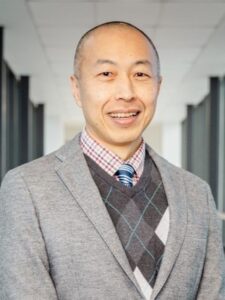

4. Toward a common internal structure/taxonomy for Medication Reviews
Workshop Facilitators:
Hans De Loof (1) and Ronja Woltersdorf (2)
Isabel Waltering (3) , Eline Tobback (1) and Maja Brumer (1,4)
1 Laboratory of Physiopharmacology, University of Antwerp Belgium
2 Department of Clinical Pharmacy, Institute of Pharmacy, University of Bonn, Germany
3 Institute for Pharmaceutical and Medicinal Chemistry, Clinical Pharmacy, University of Münster, Germany
4 Institute of Postgraduate Education for Pharmacists (IPSA), Brussels, Belgium
Background:
Medication review (MR) is a key component of pharmaceutical care, but unstandardised reporting and implementation limit quality assurance, education, research, and the adoption of best practices across Europe1-4. Furthermore, the absence of structured documentation using standardised taxonomies or coding systems hinders continuity of care, patient follow-up, and interprofessional collaboration. Because MR must remain patient-centred, a rigid approach is impractical. However, a standardised MR taxonomy would provide a flexible documentation framework, helping to overcome barriers to care and facilitate research.
Aims of the workshop
The workshop aims to develop expert consensus on the core components, domains, and
documentation elements of medication review, resulting in a preliminary taxonomy (Version 0.9) suitable for future validation and implementation across European practice settings. This framework would support harmonisation of clinical follow-up, education, competency assessment, research, and quality assurance. Because MR is inherently complex, comprehensive standardization is neither feasible nor desirable. Instead, the framework seeks to standardize the description and documentation of MR activities while preserving the flexibility needed to accommodate diverse practice settings and individualized patient care.
Learning objectives
After this workshop, participants will be able to explain the variation in MR terminology, scope and documentation practices across Europe, and discuss its implications for care continuity, education, research and quality assurance. They will compare MR documentation tools from different countries, identify common and differing elements, and relate classification systems to the review process.
Participants will apply affinity mapping (K-J method) to organise MR components into thematic domains and use the Nominal Group Technique to prioritise them against agreed criteria. They will distinguish components suitable for initial versus follow-up reviews and justify these choices based on clinical relevance, patient benefit, feasibility and resource use. Participants will be able to draft operational component definitions and relate them to existing PCNE classifications.
Click here for the full description of WS activities and references


Workshop 5: Communication with patients and other health care professionals within the concept of people-centered pharmaceutical care
The program includes two workshops, each lasting six hours, focused on communication.
Selecting this option requires participation in both workshops.
Both workshops aim to result in publications.
Targeted workshop participants: The workshop package is open to individuals interested in pharmacists’ communication from two perspectives: 1) pharmacist communication competencies, including topics such as emotional intelligence, and 2) communication with prescribers, covering how it works today and how it should be organised in the future. It is designed to accommodate both early-career and experienced researchers and pharmaceutical care practitioners. Participants will be encouraged to collaborate on further development of the PPCCI tool, further research on pharmacist-prescriber communication, and manuscript preparation for both parts.
5. a) Adaptation of the Person-Centred Care Communication Competency Self-Assessment Tool for international use
5 a) Workshop Facilitators:
Dr Dejan Senćanski, LNS Consulting & Human Development, Serbia; The University of Western Australia, School of Health and Clinical Sciences, Australia; Dr Ivana Tadić, University of Innsbruck, Austria
Background:
Person-centred care (PCC) is recognised as a fundamental component of high-quality healthcare, yet its implementation within pharmacy practice remains inconsistent. The International Pharmaceutical Federation (FIP) Statement of Policy on People-centred pharmaceutical care emphasises the importance of establishing and maintaining empathetic professional relationships between patients and pharmacists, and of integrating PCC concepts and training into pharmacy curricula and continuing professional development programmes. Despite these recommendations, the statement does not provide specific guidance on implementing PCC in pharmaceutical care, particularly regarding communication. To address this gap, the Pharmacy Person-Centred Communication Competency Inventory (PPCCI), a self-assessment tool grounded in emotional intelligence and motivational interviewing concepts, was developed and nationally validated. This tool also has the potential to serve as a Systematic Coding of Observed Human Behaviour (SCOBe) system.
Aim: To adapt and prepare the Pharmacy Person-Centred Communication Competency (PPCCI) tool for application in international contexts
Objectives and workshop outcomes:
- To introduce concepts of person-centred care and emotional intelligence
- To present the key characteristics of the PPCCI tool
- To discuss the structure of the PPCCI tool
- To adjust and develop the PPCCI tool for international application
Activities during the 6-hour workshop are:
- Introduction to the concepts of person-centred pharmaceutical care, emotional intelligence, and the PPCCI tool
- First-hand experiences: The potential application of the PPCCI tool will be demonstrated through video-recorded simulated pharmacist-patient interactions
- Group work utilising the Nominal Group Technique to adjust and develop the PPCCI tool for international use
- Discussion of methodologies for international validation of the PPCCI tool and guidelines for translation

5. b) How do community pharmacists communicate with prescribers? A European mapping and consensus workshop
5 b) Workshop facilitators:
Workshop Facilitators: Lena Klarén, PhD student; A/Prof. Elin Lehnbom; Prof. Sofia Kälvemark Sporrong, University of Uppsala, Sweden
The workshop aims to:
- Map current practices for pharmacist-prescriber communication across European countries.
- Identify and prioritise key barriers and facilitators influencing communication in community pharmacy practice.
- Explore differences in communication channels, accessibility of prescribers, and documentation practices.
- Develop consensus-based recommendations for improving pharmacist-prescriber communication across healthcare systems.
- Establish priorities for future collaborative research in this area.
Activities during the workshop
This 6-hour interactive workshop will combine data sharing, collaborative mapping, and structured consensus-building.
- Introduction and framing
Presentation of preliminary Swedish pilot data on pharmacist-prescriber communication and introduction to the workshop objectives.
- Country mapping exercise
Participants will work in small groups using a structured template to document communication practices in their respective countries, including reasons for contact, communication methods, accessibility of prescribers, and documentation systems. Findings will be aggregated to create a European overview.
- Barriers and facilitators analysis
Through facilitated discussions, participants will identify and prioritise organisational, technological, professional, and regulatory factors influencing pharmacist-prescriber communication.
- Co-creation of an ideal communication model
Participants will collaborate in mixed-country groups to define key characteristics of an effective communication system, including communication pathways, documentation practices, and opportunities for digital integration.
- Consensus-building and recommendations
Using structured consensus techniques, participants will develop and refine a set of recommendations for improving pharmacist-prescriber communication in European community pharmacy practice.
- Future collaboration
The workshop will conclude with a discussion of research priorities and opportunities for future collaboration based on the workshop findings.



Wednesday, 10th February 2027
from 9.00
Registration
10.00-12.00
WG meetings – OPEN FOR ALL PARTICIPANTS
Drug Related Problems (DRP-group)
Quality Indicators (QI-group)
Interventions derived from the 15-STARS questionnaire (Adherence group – only for invited participants currently working with the 15-STARS)
12.00-13.00
Lunch
13.00- 13.15
Welcome and opening
13.15-14.00 Foppe van Mill Memorial lecture: “Beyond Effectiveness: Implementing Complex Interventions at Scale”. Speaker Prof. Derek Stewart, Editor-in-Chief of the International Journal of Clinical Pharmacy
14.00-16.00
Workshops (1st part)
16.00-16.30
Break and free poster viewing
16.30-17.30
Poster walk session I
17.30-18.30
Oral Communication I
18.30 –21.00
New members welcome!
Thursday, 11th February 2027
9.00-9.45
Creativity and Innovation in Healthcare Transformation – Design Thinking as a viable Approach in the Artificial Intelligence (AI) Age Speaker: Dr. Joseph Maloba Makhoka
9.45-10.00
Break
10.00-12.00
Workshops (2nd part, continued)
12.00-13.00
Lunch
13.00-15.00
Workshops (3rd part, continued)
15.00-15.30
Break
15.30-16.30
Poster walk session II (including poster evaluation)
16.30-17.30
Soapbox (members only)
17.30-20.00
PCNE General Assembly (members only)
Friday, 12th February 2027
9.00-9.45
Translating research into community pharmacy care – Speaker: Prof. Hanna Seidling, University of Heidelberg, Germany
9.45-10.00
Break
10.00-12.00
Workshops (4th part, continued)
12.00-13.00
Lunch
13.00-16.00
Workshops (5th part, continued)
16.00-16.45
Group Photo and Break outside
16.45-17.45
Oral Communication II
19.00-22.00
Network Event at Elbe1 (external location)
Saturday, 13th February 2027
9.00-9.45
An Ethical Perspective on Pharmaceutical Care
Rainer Heide, Freie Universität Berlin, Germany
9.45-10.00
Break
10.00-11.00
Workshops (6th part, continued)
11.00-11.15
Break
11.15-12.30
Reports, Awards and Closing
12.30-13.00
Lunch (lunch box)
Wednesday 10th February 2025 at 17:30 – 18:30
Chair: tbd
17:30 – tbd
17:45 – tdb
18:00 – tbd
18:15 – tbd
Friday 12th February 2027 at 16:45 – 17:45
Chair: tbd
16:30 -tbd
16:45 – tbd
17:00 – tbd
17:15 – tbd