
Pharmacies' new roles in pharmaceutical care: bridging research and practice
- 8-11th February, 2023
- Hillerod, Denmark
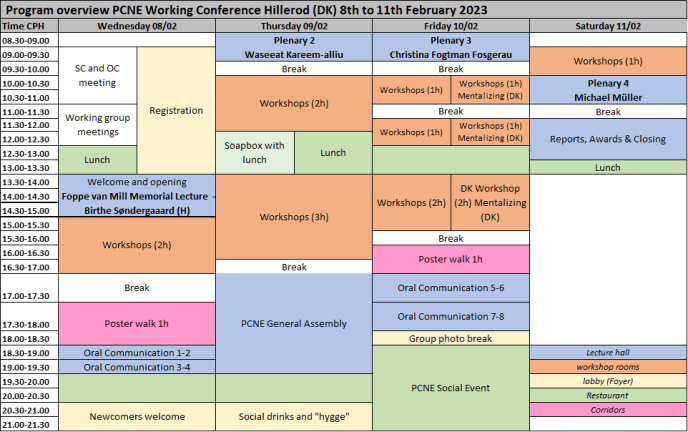
The PCNE 13th Working Conference will take place in Hillerod, Denmark 8th – 11th of February 2023. Virtual participation is also an option for parts of the conference

The conference will be held at the Pharmakon Hotel and Conference Center, Hillerød, Denmark
Address: Pharmakon Conference center, Milnersvej 42, 3400 Hillerød, Denmark
—
With the theme Pharmacies’ new roles in pharmaceutical care: bridging research and practice, the strong connection between research and practice will be demonstrated with talks about the development of pharmacy practice and how pharmacy practice keeps developing in supporting patients, improving the use of medicine, communicating with patients etc.
The conference will offer
- 5 workshops with 12 hours of intensive learning
- Foppe van Mill Memorial Lecture (hybrid)
- 3 keynote lectures (hybrid)
- 8 short oral presentations (hybrid)
- Poster session (virtual access to all posters)
The workshops
- Working with pharmacy communication research
- How to upgrade the quality of my pharmaceutical care research design (educational workshop)
- Pharmacist prescribing in Europe: are we ready?
- Medication adherence – Developing a multicentric study in community pharmacy aiming at investigating adherence to polypharmacy with a new self-report questionnaire
- Evaluation of quality indicators for measuring the quality of pharmaceutical care
Danish day (Friday 10th of February 2023)
The Danish Day is a fantastic possibility for Danish pharmacists and pharmaconomists to get an insight into the current and vibrant research in pharmaceutical care. The Danish Day is planned so participants both have their own workshop as well as being part of the PCNE 13th working Conference at Pharmakon. Participants in the Danish day are encouraged to bring a poster in English describing some research-related activities they are engaged in. The posters will be announced as part of the poster session. If bringing a poster, please send a message to susanne.kaae@sund.ku.dk – before 1st of February 2023.
Social event
For all participants interested, a social event will be held Friday 10th February in the evening at Phamakon – a perfect occasion to unite or reunite with the PCNE family.
PCNE General Assembly
The PCNE General Assembly will be held as hybrid for members of PCNE on Thursday 9th February at 17:30h.
Sponsors


Keynote lecture 01: Foppe van Mil Memorial Lecture:
Pharmacies’ new roles in pharmaceutical care: bridging research and practice – the Danish case
For the second time the Foppe van Mil Memorial Lecture, dedicated to the memory of our colleague and friend, whose lifelong dedication on fostering pharmaceutical care research will be held.
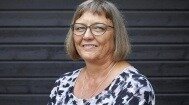
Birthe Søndergaard
Director of Healthcare, the Danish Pharmaceutical Association, Denmark
Keynote Lecture 02:
Mentalizing – a promising way to patient-centered communication in community pharmacy?
Christina Fogtmann Fosgerau, Denmark
Associate Professor in the Psychology of Language, Department of Nordic Studies and Linguistics, University of Copenhagen

Keynote Lecture 03:
Moral development from pharmacy student to established practitioner: How do we support tomorrow’s pharmacists?
Waseeat Kareem-Alliu, United Kingdom
University of Hertfordshire
This presentation will explore the progression of moral reasoning of a single cohort of students, who commenced the MPharm programme in 2008 in each year of study at the University of Hertfordshire, once after passing the General Pharmaceutical Council pharmacist registration exam (as Newly Qualified pharmacists) and a final time 5 years after they qualified (as matured Established Practitioners). The presentation will highlight factors affecting moral development in practice and recommendations the extent to which learnings from these experiences can be leveraged and included as part of the training of undergraduate pharmacists.

Keynote Lecture 04:
Sustainable Pharmacy and Pharmaceutical Care: two sides of the same coin
Professor Michael Müller
Albert-Ludwigs-University of Freiburg
Institute of Pharmaceutical Sciences
Pharmaceutical and Medicinal Chemistry
Working with pharmacy communication research

Moderators
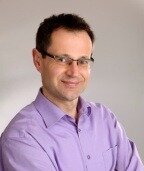
Prof. Susanne Kaae, University of Copenhagen, Denmark
Karin Svensberg, University of Uppsala, Sweden
Have a look at a short presentation of the content and of what you can expect: https://youtu.be/DgaEyyRT3u0
This workshop is for participants who are interested in developing their skills in conducting research in pharmacy communication. This can be communication in a hospital setting, in community pharmacy, in a nursing home, in the GP practice etc., and between different actors. During the workshop we will develop real communication projects that participants can take part in after the conference.
The workshop will be based on the current research interests of the participants in which communication plays a key role. Participants will beforehand be asked to think about ideas for a specific communication project, and we will depending on the number of participants and project ideas, select a number of projects to work on.
During the workshop, participants will then work on specifying the setting and background of the selected projects and develop a visual hands-on research protocol. The protocol will focus on the elements of: research questions, study design, setting and participants; and methods for data collection (e.g. survey, observation sheets and/ or interview guide).
The workshop will include short presentations from workshop leaders on each central element e.g. defining your research questions and commonly used methods in pharmacy communication research. The participants will then collaborate using visual tools to develop the protocols for each element and establish working relations to carry out the projects. As part of this work, we will try out some of the qualitative methods in pharmacy communication research.
How to upgrade the quality of my pharmaceutical care research design (educational workshop)

Moderators
Dr. Charlotte Rossing, Pharmakon, Hillerod, Denmark
Prof. Mitja Kos, University of Ljubljana, Slovenia
Have a look at a short presentation of the content and of what you can expect from this workshop: https://youtu.be/0YGWUjPrzVQ
Introduction (why this workshop): PCNE has tried, at that last conferences, to establish mentoring and network among the new commers at PCNE. In this workshop we will support this by facilitating professional networks, due
to common interests in research projects and ore methodology. Through the workshop the
participants will gain insights into other fellow researchers projects – and with their experience’s
both give and get constructive feedback.
Aim: To get a qualified and peer-reviewed feedback on your own pharmaceutical care research project
in order to advance the quality of research design.
Learning objectives:
- To understand methodological approaches in pharmaceutical care research.
- To advance your own research design.
Activities in the workshop: Participants will present their research designs of their current and/or past research projects. In-depth discussion will be stimulated in order to get a relevant feedback from the group as well as
workshop-leaders. Experiences from the past research involvements will be used to understand
the advantages and disadvantages as well as the feasibility of possible methodological
approaches. Based on the qualified and peer-reviewed feedback the participants will aim to
advance their research project designs.
Pharmacist prescribing in Europe: are we ready?

Moderators
Dr. Thomas Kempen, Nivel, NL and Uppsala University, Sweden
Prof. Sofia Kälvemark Sporrong, Uppsala University, Sweden
Prof. Liset van Dijk, Nivel and University of Groningen, Netherlands
Background: Many health systems worldwide face shortages of medical doctors and nurses, and there is major pressure on the accessibility to appropriate pharmacotherapy and high-quality care. Some countries, such as Canada, the UK and the USA, have implemented prescribing rights for pharmacists in the past years. Providing prescribing rights to pharmacists has been supported as a means of benefiting patient care by the effective use of healthcare professionals’ skills, improving patient access to timely care, and enhancing multiprofessional collaboration. Different models of pharmacist prescribing (e.g., independent, supportive, or collaborative) currently exist. Apart from the UK, pharmacist prescribing does not formally exist in Europe, even though pharmacists in different countries and settings have become more actively involved in pharmacotherapy through collaboration with medical doctors (e.g., renewal of prescriptions by pharmacists is allowed in some cases). It is unclear what pharmacists in Europe think of potential pharmacist prescribing in their countries and settings, and what possibilities and challenges they see to introduce prescribing rights for pharmacists. Aim: The aim of this workshop is to present recent literature on pharmacist prescribing, to discuss pharmacist prescribing from the participants’ perspectives, and to introduce a possible European survey on the views of pharmacists on prescribing rights for pharmacists.
Workshop content: In this workshop we will introduce pharmacist prescribing, based on current literature about the status and evidence of, and experiences with pharmacist prescribing, worldwide. Participants will then discuss and reflect upon the situation in their own countries and contexts. Are they aware of any national or local initiatives? To what extent are they already involved in medication prescribing? Should prescribing rights for pharmacists be introduced, extended, or further implemented in their country? What conditions should be met before prescribing rights should be introduced? We will continue by introducing results from a pilot survey conducted in Sweden on the views of pharmacists on prescribing rights for pharmacists. Participants will first be asked to individually complete the survey. Thereafter, the questions and results of the survey will be discussed, including a potential European study based on the pilot survey.
Learning objectives: As a participant you will:- understand the concept of pharmacist prescribing, and the status and models of pharmacist prescribing in several countries worldwide;- get insight into the perspectives of other European pharmacists on the potential introduction/extension of pharmacist prescribing;- reflect upon potential pharmacist prescribing in your own country/context;- get a basic understanding of and be involved in the development of a survey on pharmacist prescribing.
Medication adherence - Developing a multicentric study in community pharmacy aiming at investigating adherence to polypharmacy with a new self-report questionnaire

Moderators:
Dr Isabelle Arnet, University of Basel, Basel, Switzerland
Dr Christiane Eickhoff, ABDA, Berlin, Germany
Fine Dietrich, cand PhD, University of Basel, Basel, Switzerland
Description of the WS content: During the past 2 years, a novel 15-items questionnaire to assess modifiable barriers to medication adherence in ambulatory patients has been developed and validated. Translation in several languages is being performed with a standardized procedure following a “preferred method for translation”. Time has now come to use the 15-STARS questionnaire in pharmacy practice. This workshop aims at (i) defining the scope of application of the 15-STARS; (ii) determining a research question on adherence to polypharmacy in community pharmacies that is shared in several European countries; (iii) developing an appropriate study design to answer the research question; (iv) exploring strategies to recruit participants to studies in community pharmacies.
To reach these objectives, the workshop will be organised in two parts: A) regarding the study design (3 sessions of 2-3 hours); B) regarding the recruitment strategies (1 session of 2-3 hours).
What can participants expect from the WS? Participants will refresh their knowledge about medication adherence and self-report questionnaires; will share knowledge about the development of a multicentric research study including primary endpoints and statistical analysis; will discuss requirements of ethic committees in several European countries; will get aware of difficulties to recruit ambulatory patients for research and how to overcome these. Participants interested in running the study in their countries will obtain main elements for a study proposal.
Who can participate to the WS? Participants from all levels of expertise can join the WS, from PhD students to experts in performing research studies and from all nations. Specific preliminary knowledge is not mandatory. Participation to former workshops on medication adherence in 2020 and 2021 is not mandatory.
Evaluation of quality indicators for measuring quality of pharmaceutical care

Moderators
Dr. Kenji Fujita, The University of Sydney, Kolling Institute, Australia
Associate Professor Kjell H Halvorsen, UiT The Arctic University of Norway, Norway
Associate Professor Martina Teichert, Leiden University, Netherlands
Description of the WS content:
Measuring quality of care is vital for different stakeholders within healthcare systems. Quality indicators (QIs) for pharmaceutical care are validated measurement tools to monitor structures, processes or outcomes in the context of care provided by pharmacists. Because the validity and reliability of QIs are crucial for QIs being useful in pharmacy practice, multiple measurement properties have been proposed for the evaluation of quality of QIs. The choice of measurement properties mainly depends on the intended use of the QIs. Pharmacists and pharmacy practice researchers need to be equipped with knowledge and insight into measurement properties to be able to develop and select QIs for their intended use and to interpret pharmacy scores on QIs,
In addition, Maturity Matrixes have been developed for primary care practices to show growth in organisational development to warrant the quality of care desired. The growth steps within the Maturity Matrix domains indicate for an organisational domain in the development and suggest consecutive steps in quality improvement. Possibly QIs developed as growths steps can support pharmacy teams in the implementation of guidelines.
Learning objectives
After this workshop participants will be able to:
1. explain measurement properties of QIs
2. evaluate a QI dataset for different stakeholders’ intended use of QIs
3. assess organisational readiness by QI scores as Maturity Matrix growth steps
Short lectures
1. How to measure quality of care using QIs?
2. How to evaluate measurement properties of QIs (e.g. validity, feasibility, applicability and reliability)?
3. How to assess organisational growth in pharmacy teams with a Maturity Matrix
Activities
During this workshop participants will:
1. discuss barriers and facilitators for improving each measurement properties of QIs.
2. analyse and interpret QI dataset to evaluate which facilities have the highest/lowest care quality in accordance with the different stakeholders’ intended use of QIs.
3. explore how growth steps within organisational readiness can improve QI scores.
Targeted workshop participants
Anyone, including higher degree research students, who are interested in measuring and improving quality of care can join in this workshop. During the workshop, participants will be provided with pre-analysed QI scores as well as raw QI dataset as an excel file. Therefore, entry level of excel skills (e.g. create a line graph) may be useful but not prerequisite.
Wednesday 8th February 2023 at 18:30 – 19:30
Session “Interprofessional & Clinical trials” (Chair: Prof. Ivana Tadic)
18:30 – Implementation of pharmaceutical care in daily practice in South-eastern Europe Health Network (SEEHN) member states (608)
Silvia Ravera (France)
Council of Europe – European Directorate for the Quality of Medicines and HealthCare (EDQM)
18:45 – Developing a healthcare service for patients experiencing late effects of cancer – a new role for community pharmacy? (626)
Lotte Stig Nørgaard (Denmark)
Faculty of Health and Medical Sciences – University of Copenhagen
19:00 – Effect of an intake aid with reminder function on timing adherence to DOAC in stroke patients – a randomised cross-over trial (614)
Fine Dietrich (Switzerland)
Pharmaceutical Care Research Group, Dept of Pharmaceutical Sciences, University of Basel
19:15 – Health outcomes of patient-centered medication review interventions. (Preliminary results) (635)
Carol Rovira Algara (Spain)
Clinical Pharmacy and Pharmaceutical Care Unit. Dept of Pharmacy and Pharmaceutical Technology, and Physical Chemistry. University of Barcelona
Friday 10th February 2023 at 17:30 – 18:30h
Session on “Issues with prescribing” (Chair: Prof. Marina Odalovic)
17:30 – European cross-border ePrescription service: Estonian and Finnish pharmacists’ first experiences with pharmacist-patient interaction and safe use of medications (596)
Reelika Jõgi (Estonia)
Estonian State Agency of Medicines, University of Tartu
17:45 – Barriers and facilitators to implement a service for pharmacists prescribing in Switzerland (624)
Noelia Amador-Fernández (Switzerland)
Centre for Primary Care and Public Health, University of Lausanne
18:00 – Quantifying problematic prescribing cascades (583)
Jacqueline Hugtenburg (Netherlands)
Amsterdam UMC, Dept. Clin. Pharmacology and Pharmacy
18:15 – Can community pharmacists be elderly patients’ bridge to deprescribing? A cross- sectional study (581)
Iva Bužančić (Croatia)
University of Zagreb, Faculty of Pharmacy and Biochemistry, Zagreb; City pharmacies Zagreb